
Call Us Any Time
+86-379-60689957
Call Us Any Time
+86-379-60689957
In modern industrial systems where precision, compact design, and high efficiency are essential, thin section bearings have become a critical component across a wide range of applications. From industrial robotics and semiconductor equipment to aerospace assemblies and medical devices, these bearings support smooth motion while maintaining strict dimensional constraints.
However, many equipment failures do not originate from design flaws, but from inadequate maintenance practices. Among these, improper cleaning and lubrication remain one of the most common causes of premature bearing failure. This guide provides a comprehensive, practical, and experience-driven approach to cleaning and re-greasing thin section bearings, helping maintenance teams extend service life, reduce downtime, and improve overall equipment performance.
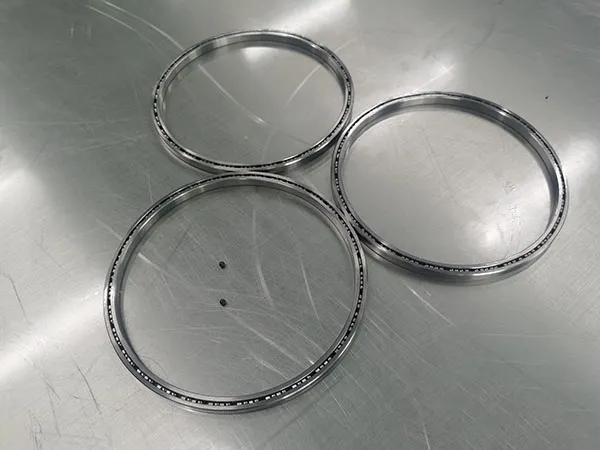
Thin section bearings are specifically engineered to deliver high load capacity within a minimal cross-sectional profile. Unlike conventional bearings, their thin-walled structure allows engineers to reduce overall system weight and size without compromising rotational accuracy.
Manufacturers typically use these bearings in applications such as:
Precision rotary tables
Industrial robot joints
Aerospace positioning systems
Automated inspection equipment
Medical imaging devices
While this compact design offers clear advantages, it also introduces certain vulnerabilities. The reduced cross-section makes these bearings more sensitive to contamination, lubrication degradation, and installation errors. Even small particles or insufficient lubrication can quickly affect performance, leading to increased torque, vibration, and wear.
Why Proper Cleaning and Re-Greasing Is Critical
Many operators underestimate how quickly lubrication performance can deteriorate under real working conditions. Grease is continuously exposed to heat, mechanical shear, oxidation, and environmental contaminants. Over time, it loses its ability to reduce friction and protect internal surfaces.
At the same time, contaminants such as dust, metal particles, and moisture gradually accumulate inside the bearing. If left unaddressed, these contaminants can:
Accelerate abrasive wear
Increase operating temperature
Cause noise and vibration
Lead to corrosion and pitting
Ultimately result in bearing failure
A well-structured maintenance routine that includes periodic cleaning and re-greasing can significantly improve reliability. In many industrial cases, proper lubrication management alone can extend bearing life by 30% to 50%.
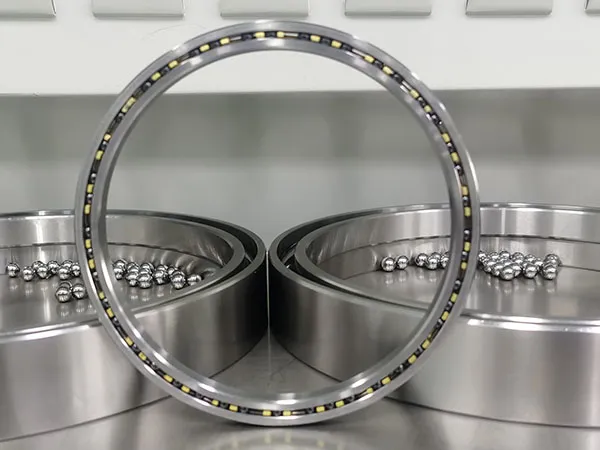
1. Preparation and Work Environment Control
Before starting the cleaning process, technicians should prepare a clean and controlled workspace. Contamination during maintenance is one of the most overlooked risks.
Recommended preparation includes:
Lint-free cloths and wipes
Non-metallic brushes (nylon or plastic)
Compatible industrial degreasing solvent
Clean containers for soaking
Compressed air (filtered and dry)
Personal protective equipment (gloves, goggles, masks)
A clean environment ensures that no additional contaminants are introduced during the process.
2. Careful Bearing Removal
Technicians should disassemble surrounding components carefully to access the bearing. During removal, it is important to:
Record the installation orientation
Avoid impact tools whenever possible
Use proper bearing pullers if necessary
Thin section bearings are more prone to deformation than standard bearings, so excessive force or improper handling can permanently damage raceways.
3. Preliminary Surface Cleaning
Before applying any solvent, technicians should remove visible dirt and grease from the bearing surface using a lint-free cloth. This step helps prevent abrasive particles from spreading deeper into the bearing during washing.
4. Deep Degreasing
The bearing should then be immersed in a suitable cleaning solvent. Petroleum-based or alcohol-based solvents are commonly used, depending on material compatibility.
During this stage:
Gently rotate the bearing to release trapped grease
Use a soft brush to clean between rolling elements
Avoid aggressive scrubbing that may scratch precision surfaces
Proper degreasing removes hardened grease deposits and embedded contaminants.
5. Rinsing and Thorough Drying
After cleaning, the bearing must be rinsed using fresh solvent to remove any remaining residue. Drying is equally important and should be done carefully:
Use clean, dry compressed air (low pressure)
Alternatively, allow natural air drying in a dust-free area
Any residual moisture can lead to corrosion after re-lubrication, especially in high-humidity environments.
6. Detailed Inspection
Inspection is a crucial step that should never be skipped. Technicians should examine:
Raceway surfaces for pitting or scoring
Rolling elements for wear or discoloration
Signs of corrosion or overheating
Any abnormal deformation
If defects are detected, replacing the bearing is often more cost-effective than risking system failure.
1. Selecting the Appropriate Grease
Choosing the right lubricant directly affects performance and service life. The selection should consider:
Operating temperature range
Load conditions (radial and axial)
Rotational speed
Environmental exposure (dust, moisture, chemicals)
For thin section bearings, low-viscosity, high-purity greases are generally preferred because they reduce rotational resistance while maintaining sufficient lubrication film strength.
2. Controlled Grease Application
Technicians should apply grease evenly across all rolling elements and raceways using a clean tool such as a syringe or spatula.
It is important to note that more grease does not mean better performance. Over-lubrication can:
Increase torque and drag
Cause overheating
Attract contaminants
A thin, uniform layer is sufficient for optimal operation.
3. Precision Reinstallation
During reinstallation, alignment accuracy is critical. The bearing must be mounted without tilt or uneven force.
Best practices include:
Ensuring housing and shaft surfaces are clean
Applying even pressure during installation
Avoiding hammering or direct impact
Improper installation can negate all prior maintenance efforts.
4. Operational Testing and Monitoring
After assembly, the equipment should be tested under controlled conditions. Operators should monitor:
Noise levels
Vibration patterns
Operating temperature
Rotational smoothness
Documenting these parameters helps establish a maintenance baseline and supports predictive maintenance strategies.
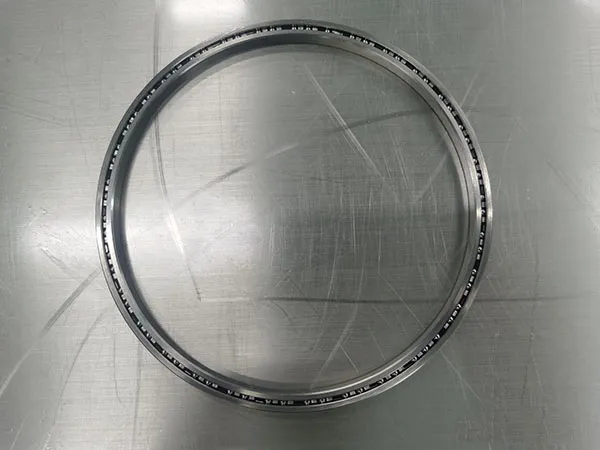
To maximize performance and reduce lifecycle costs, companies should adopt a proactive maintenance approach:
Establish scheduled inspection intervals based on operating conditions
Increase maintenance frequency in dusty or high-humidity environments
Use sealing solutions to minimize contamination ingress
Train maintenance personnel on correct handling techniques
Maintain detailed service records for each bearing
Organizations that implement systematic maintenance protocols often see significant improvements in equipment uptime and reliability.
Cleaning and re-greasing thin section bearings is not simply a routine maintenance task—it is a strategic investment in equipment performance and operational efficiency. When performed correctly, this process minimizes friction, reduces wear, and ensures consistent precision in demanding applications.
For industries such as robotics, aerospace, and automated manufacturing, where even minor deviations can lead to costly downtime, proper bearing maintenance becomes a critical success factor. By following a structured and detail-oriented approach, companies can extend bearing service life, lower maintenance costs, and enhance overall system stability.
In an increasingly competitive industrial landscape, businesses that prioritize preventive maintenance and technical expertise will always gain a measurable advantage. Thin section bearings may be small in size, but their impact on performance is significant—and maintaining them properly is essential for long-term success.
Comprehensive Guide to Cleaning and Re-Greasing Thin Section Bearings for Long-Term Reliability
2026-03-24 11:23Understanding and Preventing Premature Failure in Thin Section Ball Bearings: A Practical Engineering Perspective
2026-03-18 20:29The Engineering Dilemma: Stainless Steel vs. Chrome Steel for Thin Section Bearings in Corrosive Environments
2026-03-11 13:02Optimizing Thin Section Bearing Torque for High-Speed Applications: Advanced Engineering Insights
2026-03-05 13:35Address: Lianmeng Road, Jianxi district, Luoyang City,Henan province.
E-mail: info@lynicebearing.com
Phone: +86-379-60689957
If you are interested in our products and services,
please feel free to contact us!
Get in tuch

+86-379-60689957
Lianmeng Road, Jianxi district, Luoyang City,Henan province.