
Call Us Any Time
+86-379-60689957
Call Us Any Time
+86-379-60689957
In the realm of modern mechanical engineering, thin section bearings have emerged as indispensable components for high-speed, precision-driven applications. From aerospace actuators and robotic joints to industrial automation systems, these bearings offer a compact yet robust solution where conventional bearings would be too bulky or heavy. Characterized by their reduced cross-sectional thickness while maintaining substantial load-carrying capacity, thin section bearings excel in scenarios with stringent space and weight limitations. However, despite their advantages, engineers frequently encounter challenges in accurately determining the torque requirements under high-speed conditions—a critical factor that, if mismanaged, can trigger excessive friction, accelerated wear, vibration issues, and ultimately, operational inefficiencies that compromise performance and reliability.
Thin section bearings differ from traditional bearings primarily in their slender profile, which allows for integration into compact mechanical assemblies without sacrificing rigidity or load capacity. Their lightweight construction makes them especially suitable for high-speed rotations, precision alignment, and applications where the bearing envelope directly impacts the overall system design. Common use cases include satellite positioning systems, high-speed turntables in optical or semiconductor equipment, precision medical imaging devices, and automated manufacturing machinery, where every millimeter and gram counts.
Yet, the very design that makes thin section bearings advantageous also renders them more sensitive to torque-related issues. Reduced material volume can amplify heat generation, frictional forces, and mechanical stress under dynamic loads, meaning that even small miscalculations can have outsized consequences. High-speed operation introduces additional complexities, including centrifugal forces, fluctuating dynamic loads, lubrication film instability, and thermal expansion. Therefore, a detailed, methodical approach to torque calculation is not merely advisable—it is essential for ensuring operational efficiency and longevity.
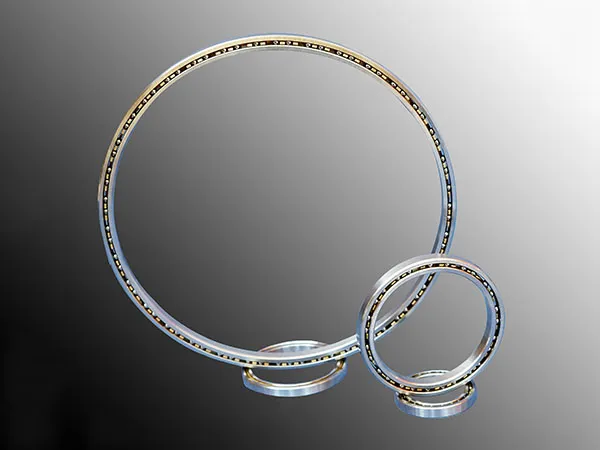
Accurate torque calculation for thin section bearings in demanding applications requires consideration of multiple, interrelated factors:
Friction Torque: Friction is the primary resistance a bearing faces during rotation, influenced by bearing type, internal clearances, lubrication characteristics, and rotational speed. While manufacturers provide baseline friction coefficients, these figures often assume ideal conditions. In practice, temperature variations, contamination, and misalignment can dramatically alter frictional behavior, necessitating adjustments in torque estimation.
Load-Induced Torque: Bearings in high-speed systems must counteract both radial and axial loads. These loads generate additional resistance, which the drive system must overcome. Misalignment or uneven load distribution can exponentially increase torque requirements due to vibration and dynamic effects. Advanced computational techniques, including finite element analysis (FEA) and multibody simulations, allow engineers to model these scenarios and predict torque with higher fidelity.
Lubrication Effects: Lubrication not only minimizes friction but also controls temperature rise within the bearing assembly. High-speed thin section bearings often require low-viscosity lubricants with high thermal stability. Engineers must consider lubrication film thickness, as thin films can behave unpredictably at high rotational speeds, affecting both torque and operational stability. Regular assessment of lubricant condition, contamination levels, and reapplication schedules is equally crucial.
High-Speed Dynamic Considerations: Centrifugal forces at elevated rotational speeds can modify internal load distribution, while thermal expansion may alter bearing clearances and friction characteristics. These high-speed phenomena necessitate the inclusion of correction factors in torque calculations to maintain predictive accuracy.
To optimize bearing performance and minimize mechanical risk, engineers can adopt the following stepwise methodology:
Collect Bearing Specifications: Gather essential parameters such as inner and outer diameters, cross-section, internal clearance, material properties, and manufacturer-rated load capacities.
Analyze Operating Conditions: Include rotational speed, expected radial and axial loads, operating temperature range, and potential misalignments or vibration sources.
Assess Friction Coefficient: Begin with manufacturer-provided values and adjust for real-world factors including lubricant type, contamination, and speed-dependent changes.
Compute Baseline Torque: Apply fundamental formulas, such as: T=f⋅Fr⋅r
where T is the torque, f the friction coefficient, Fr the radial load, and r the pitch radius. This calculation forms the foundation for further high-speed corrections.
Apply High-Speed Corrections: Incorporate adjustments for centrifugal effects, thermal expansion, and dynamic load variations to capture real operating conditions.
Validate Through Simulation: Use FEA or multibody dynamic simulation tools to verify torque estimates under realistic scenarios, identifying potential hotspots or frictional peaks.
Iterate and Refine: Based on simulation outcomes, optimize bearing selection, lubrication strategy, and system design to ensure smooth, efficient operation while preventing overloading or premature wear.
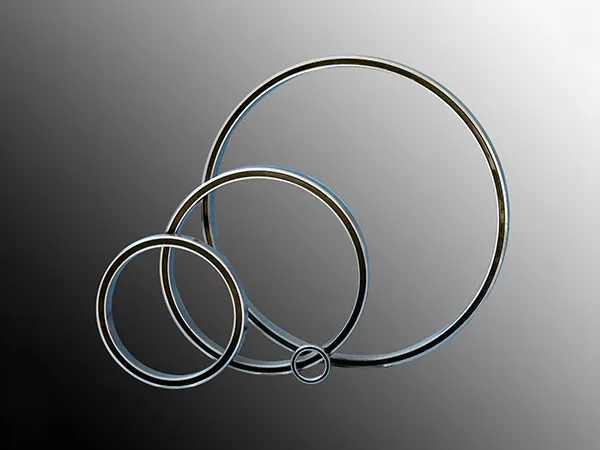
Implementing accurate torque estimation delivers multiple, tangible benefits. Reduced friction translates to lower energy consumption, extended bearing life, and enhanced reliability. Predictive torque modeling helps avoid over-dimensioning of motors or drive systems, reducing weight, cost, and footprint—critical in aerospace, robotics, and precision manufacturing. Furthermore, torque monitoring supports predictive maintenance, enabling early detection of wear, misalignment, or lubricant degradation. By acting on these insights, engineers can minimize unplanned downtime, enhance operational efficiency, and align with modern Industry 4.0 strategies emphasizing real-time monitoring and proactive maintenance.
Thin section bearings are vital for high-speed applications where space, weight, and precision cannot be compromised. Their specialized design demands meticulous torque analysis to prevent operational inefficiencies, excessive wear, and system failures. By systematically considering friction, load distribution, lubrication, and dynamic high-speed effects, engineers can ensure optimized performance, extended bearing lifespan, and reduced operational costs. As industries continue to pursue higher speeds, tighter tolerances, and more compact designs, the role of precise torque estimation in thin section bearings becomes increasingly critical—cementing it as a foundational practice in contemporary mechanical engineering.
Comprehensive Guide to Cleaning and Re-Greasing Thin Section Bearings for Long-Term Reliability
2026-03-24 11:23Understanding and Preventing Premature Failure in Thin Section Ball Bearings: A Practical Engineering Perspective
2026-03-18 20:29The Engineering Dilemma: Stainless Steel vs. Chrome Steel for Thin Section Bearings in Corrosive Environments
2026-03-11 13:02Optimizing Thin Section Bearing Torque for High-Speed Applications: Advanced Engineering Insights
2026-03-05 13:35Address: Lianmeng Road, Jianxi district, Luoyang City,Henan province.
E-mail: info@lynicebearing.com
Phone: +86-379-60689957
If you are interested in our products and services,
please feel free to contact us!
Get in tuch

+86-379-60689957
Lianmeng Road, Jianxi district, Luoyang City,Henan province.