
Call Us Any Time
+86-379-60689957
Call Us Any Time
+86-379-60689957
Thin section bearingshave become indispensable in industries where space, weight, and precision are critical, including robotics, aerospace, medical devices, and industrial automation. Their compact design allows for high performance in confined spaces, but it also makes them more susceptible to corrosion. Even minor rust or contamination can compromise bearing efficiency, reduce load capacity, and lead to unexpected downtime—issues that can be costly in precision-driven operations.
In this article, we explore practical strategies for protecting thin section bearings from corrosion, ensuring long-term reliability and optimal machine performance.
Due to their reduced wall thickness and minimal internal clearance, thin section bearings are particularly sensitive to moisture, chemicals, and particulate contaminants. Corrosion can lead to:
Increased friction and wear, reducing efficiency
Premature bearing failure, requiring costly replacements
Decreased load-carrying capacity, affecting system performance
Unexpected machine downtime, impacting production schedules
Even minor pitting or surface rust can create irregular rolling surfaces, amplifying vibration and wear. For industries where precision is critical, proactive corrosion prevention is essential.
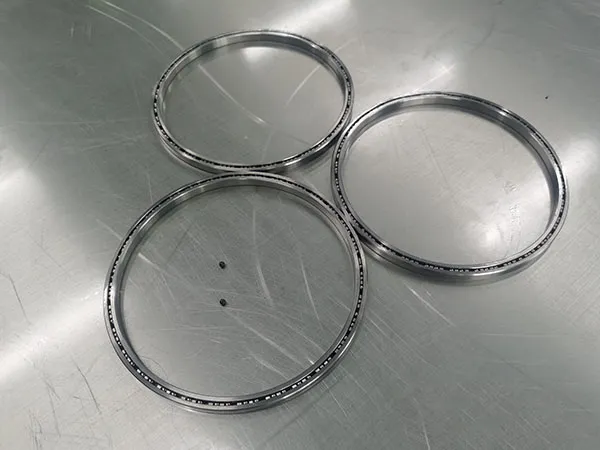
Selecting the right material is the first and most effective defense against corrosion. Options include:
Stainless Steel Bearings: Superior corrosion resistance compared to carbon steel, ideal for humid or chemically active environments.
Chrome-Plated Surfaces: A hard, corrosion-resistant layer protects bearing rings and rolling elements from wear and moisture.
Ceramic Elements: Hybrid bearings with ceramic balls resist rust and chemical attacks, particularly useful in high-speed or harsh chemical conditions.
Additional surface treatments can further enhance protection:
Passivation improves stainless steel’s natural corrosion resistance.
Phosphate coatings provide a thin protective layer suitable for light industrial use.
Electroless nickel plating offers uniform corrosion protection on complex geometries.
Proper lubrication serves a dual purpose: reducing friction and forming a protective barrier against moisture. Effective strategies include:
Grease Lubrication: Use high-quality, water-resistant grease to prevent rust in humid or wet environments.
Oil Bath Lubrication: Continuous oil supply cools bearings while protecting against corrosion.
Additive Lubricants: Corrosion inhibitors in grease or oil enhance protection in aggressive chemical or saline conditions.
Regular inspection and timely re-lubrication are critical, especially for bearings operating under high load, high speed, or fluctuating temperature conditions.
Minimizing exposure to corrosive factors is a simple yet highly effective method:
Sealing Solutions: Shields, contact seals, or labyrinth seals prevent dust, water, and chemical ingress.
Climate Control: In indoor applications, controlling humidity or using dehumidifiers reduces corrosion risk significantly.
Protective Covers: Temporary covers during storage or transport help prevent moisture accumulation.
For example, robotic assembly lines in food processing facilities often use sealed thin section bearings to prevent moisture contamination from cleaning processes.
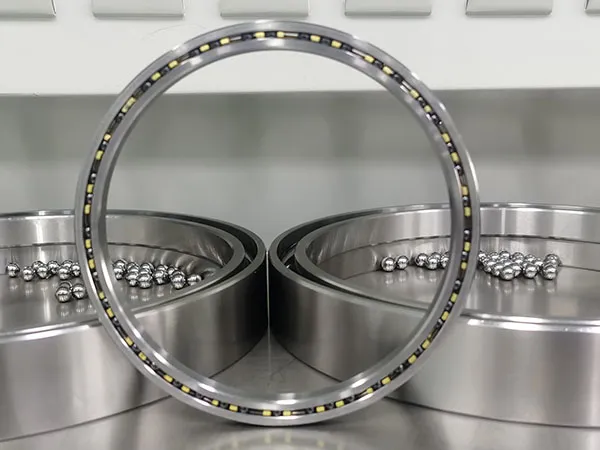
Proper storage and handling before installation are equally important:
Keep bearings in dry, temperature-controlled environments.
Retain bearings in original packaging until installation.
Avoid touching bearing surfaces with bare hands; natural oils and sweat can accelerate corrosion.
These steps ensure bearings maintain their precision tolerance and are ready for long-term use once installed.
Even with optimal materials and lubrication, routine inspection is necessary to catch early signs of corrosion:
Look for discoloration, pitting, or unusual noise during operation.
Clean bearings and surrounding components before relubrication.
Replace any bearing showing corrosion signs to prevent damage to connected machinery.
Implementing a structured maintenance schedule can extend bearing life by years and reduce unexpected operational interruptions.
Thin section bearings are compact, high-precision components essential in modern machinery, but their reduced size makes them vulnerable to corrosion. By combining careful material selection, advanced surface treatments, proper lubrication, environmental control, and proactive maintenance, companies can maximize bearing longevity and reliability.
Investing in corrosion protection not only reduces downtime and maintenance costs but also ensures that critical industrial systems operate safely and efficiently. For businesses in robotics, aerospace, or industrial automation, these strategies are a crucial part of achieving consistent, high-performance operations.
The Engineering Dilemma: Stainless Steel vs. Chrome Steel for Thin Section Bearings in Corrosive Environments
2026-03-11 13:02Optimizing Thin Section Bearing Torque for High-Speed Applications: Advanced Engineering Insights
2026-03-05 13:35Slewing Bearing Care in Wind Turbines: Expert Lubrication & Maintenance
2026-02-25 09:47Thin Section Bearing Corrosion Protection Methods: Maximizing Performance and Longevity
2026-01-28 08:55Address: Lianmeng Road, Jianxi district, Luoyang City,Henan province.
E-mail: info@lynicebearing.com
Phone: +86-379-60689957
If you are interested in our products and services,
please feel free to contact us!
Get in tuch

+86-379-60689957
Lianmeng Road, Jianxi district, Luoyang City,Henan province.