In industrial machinery, lifting equipment, and automation systems, slewing bearings, as core components for load bearing and rotation, directly affect the operational stability and lifespan of the equipment. Surface roughness is determined by the bearing's precision and dimensions; higher precision results in lower surface roughness, and larger diameters lead to higher surface roughness. Therefore, bearing surface roughness is one of the main factors determining bearing performance. This article will comprehensively analyze the multifaceted impact of surface roughness on slewing bearings and provide optimization suggestions to help companies improve equipment reliability and efficiency.
What is Bearing Surface Roughness?
Bearing surface roughness refers to the degree of microscopic unevenness on the bearing raceway surface, usually expressed by parameters such as Ra and Rz. Excessive or insufficient surface roughness will have varying degrees of impact on bearing operation; therefore, properly controlling surface roughness is a crucial aspect of bearing manufacturing and application.
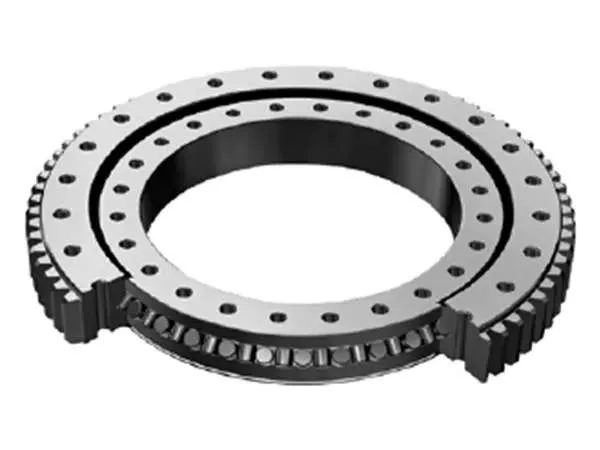
Main Impacts of Surface Roughness on Slewing Bearings
1. Impact on Friction and Energy Consumption
Excessive bearing surface roughness leads to increased friction between the rolling elements and the raceway, thereby increasing the equipment's energy consumption and heat generation. This not only reduces bearing efficiency but may also accelerate lubricant aging and shorten bearing life.
Conversely, an overly smooth surface may cause rolling element slippage, reducing rolling friction efficiency. Therefore, maintaining appropriate surface roughness helps achieve low-friction, high-efficiency operation.
2. Impact on Wear and Fatigue Life
Under high load and frequent start-stop conditions, small defects on the raceway surface of slewing bearings can easily form stress concentration points, accelerating wear and even leading to early fatigue cracks. Appropriate surface roughness can improve lubricant film formation, reduce direct metal-to-metal contact, and thus extend bearing life.
3. Impact on Lubrication Effect
The lubricant film acts as a buffer and coolant between the rolling elements and the raceway surface. With appropriate surface roughness, small irregularities help with lubricant storage and distribution, forming a stable oil film; excessive roughness can lead to oil film rupture and insufficient lubrication; excessive roughness may result in an overly thin oil film, increasing the risk of friction.
4. Impact on Operating Noise and Vibration
Uneven or excessive surface roughness can cause impact and vibration of the rolling elements on the raceway, resulting in noise and affecting the operating environment. For high-precision equipment such as wind turbines or cranes, noise and vibration directly impact operational comfort and safety; therefore, optimizing surface roughness is a crucial noise reduction measure.
How to Optimize the Surface Roughness of Slewing Bearings
Precision Machining Technology: Employ grinding, ultra-precision grinding, or rolling processes to control the microscopic profile of the raceway surface.
Surface Inspection and Control: Ensure the surface meets design standards using a 3D profile measuring instrument or roughness measuring instrument.
Lubrication Selection and Management: Select the appropriate lubricant type and viscosity based on the surface roughness to ensure oil film stability.
Installation and Commissioning: Avoid impacts or scratches during installation to maintain surface precision and ensure long-term reliable bearing operation.
Summary
The surface roughness of slewing bearings has a particularly critical impact on performance, affecting friction, wear, lubrication, vibration, and noise. By optimizing surface roughness through precision machining, surface inspection, lubrication management, and proper installation, bearing efficiency can be improved, equipment lifespan extended, and maintenance costs reduced. Therefore, companies should place great emphasis on surface precision control during bearing selection, manufacturing, and maintenance, enhancing overall bearing performance through rational design and processing techniques.
Optimizing bearing surface roughness is not only key to improving mechanical efficiency but also an important means for companies to enhance product reliability and market competitiveness.

