
Call Us Any Time
+86-379-60689957
Call Us Any Time
+86-379-60689957
Thin section bearings are widely used in industries that demand compact structures, lightweight components, and high accuracy—such as robotics, aerospace systems, semiconductor equipment, medical devices, and automated machinery. Their unique geometry makes them ideal for designs with limited space, but this same advantage also introduces stricter requirements for installation, operating conditions, and maintenance.
When a thin section bearing fails, the consequences can be far more serious than with conventional bearings: equipment downtime increases, precision is compromised, and repair costs escalate. Understanding why these failures occur and how to prevent them is therefore essential for engineers and machine operators.
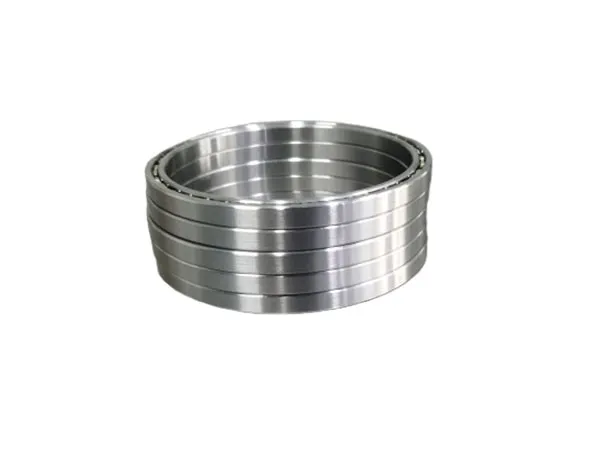
1. Misalignment Under Tight Installation Conditions
Thin section bearings are far less tolerant of misalignment because of their narrow cross-section.
Even a minor angular or parallel shift can cause uneven stress distribution.
Rolling elements begin to contact the raceways in a concentrated area rather than distributing the load evenly.
Over time, this leads to accelerated wear, vibration, and eventual spalling.
In robotic joints or precision platforms, even fractional misalignments can shorten bearing life dramatically.
2. Contamination in Compact Operating Environments
Thin section bearings often work inside assemblies where space is extremely limited. This increases the chance that:
Dust, machining debris, metal chips, or moisture enter the bearing cavity.
Contaminants scratch the raceway surface and create micro-pitting.
Lubricant deteriorates faster, turning abrasive and causing rolling-element fatigue.
In cleanroom or medical applications, contamination is one of the most common root causes of failure.
3. Load Beyond the Rated Capacity
Thin section bearings are carefully engineered for specific radial, axial, and moment loads. When these limits are exceeded:
Brinelling marks—small permanent indentations on raceways—may appear.
In heavy-duty cases, the bearing may crack or deform.
Moment load miscalculations are particularly common in rotary tables and robotic arms.
Overloading often happens not during normal operation but during unexpected impacts or startup/shutdown conditions.
4. Improper or Insufficient Lubrication
Because thin section bearings have smaller rolling elements and limited internal volume, lubrication becomes more critical.
Common lubrication issues include:
Too little lubricant → metal-to-metal contact and overheating
Too much lubricant → increased friction and heat accumulation
Wrong grease or oil → chemical incompatibility or contaminant attraction
Incorrect lubrication is often one of the first detectable causes of abnormal noise and temperature rise.
5. Installation Errors and Improper Handling
Compared with standard bearings, thin section bearings require more controlled installation:
Uneven mounting pressure can deform the rings.
Forcing the bearing into position may introduce small distortions.
Using the wrong tools easily leads to invisible damage that only shows during operation.
In high-precision machinery, installation errors account for more than half of premature failures.
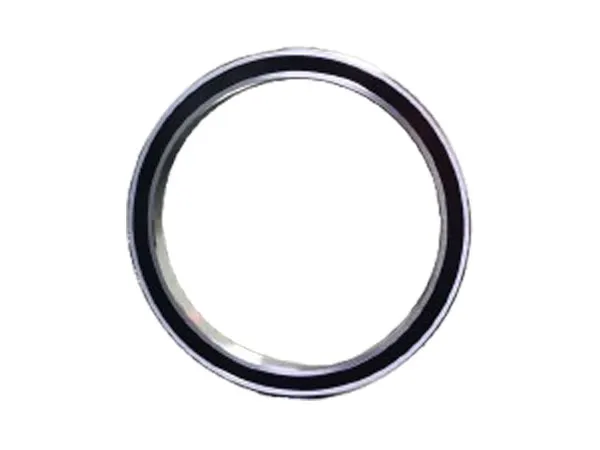
1. Precision Alignment and Correct Assembly Procedures
To reduce misalignment risks:
Use torque-controlled tools and flatness-calibrated surfaces.
Follow the manufacturer’s recommended mounting sequence.
For structures with unavoidable tolerance variations, consider using flexible couplings or self-aligning support designs.
Engineering teams should treat alignment as a quality-control step, not an afterthought.
2. Improved Sealing and Clean Environment Management
To keep contaminants away:
Use sealed or shielded bearing options in dusty or humid conditions.
Implement dust-proof covers or enclosure systems around critical mechanisms.
Clean the assembly area before installation; avoid touching bearings with bare hands.
For high-tech applications, adding filtration or positive-pressure chambers significantly reduces contamination risks.
3. Load Evaluation and Structural Optimization
Engineers should:
Calculate maximum expected loads during dynamic operation—not only under rated conditions.
Choose bearings with adequate safety margins.
Consider upgrading to reinforced or double-row thin section bearings if shock loads exist.
In automation equipment, redistributing load paths can often extend bearing life without major redesign.
4. Lubrication Planning and Monitoring
Reliable lubrication management includes:
Using manufacturer-approved lubricants suitable for operating temperature and speed.
Establishing periodic lubrication schedules based on actual operating hours.
Installing automatic lubrication systems for high-duty cycles or 24/7 machinery.
Real-time lubrication monitoring helps catch early lubrication failure before damage occurs.
5. Routine Inspection and Predictive Maintenance
Useful inspection methods include:
Vibration analysis to detect imbalance or wear
Temperature monitoring to identify friction or lubrication issues
Visual inspection during shutdown cycles
Detecting abnormalities early prevents secondary damage to surrounding components.
6. Upgrading Materials and Bearing Configurations
For demanding environments, selecting specialized materials can significantly improve lifespan:
Stainless steel for corrosion resistance
Hybrid ceramic bearings for high-speed and cleanroom applications
Advanced raceway coatings for reduced friction and improved wear resistance
Choosing the right bearing series at the design stage is a key investment in long-term reliability.
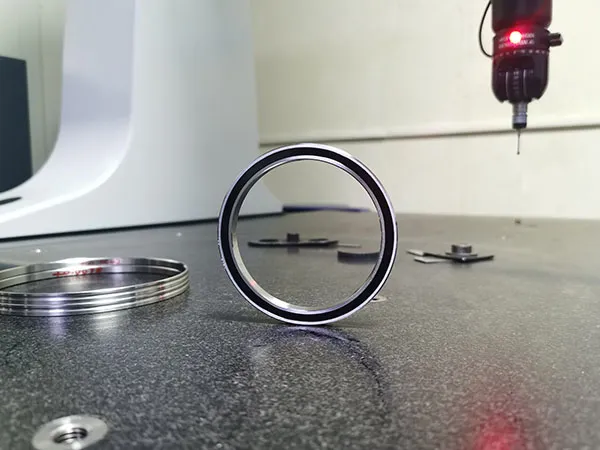
Thin section bearings bring unique advantages to modern high-precision engineering, but their compact geometry also means that improper installation, contamination, incorrect loading, and poor lubrication can quickly lead to failure. By understanding these factors and adopting targeted preventive strategies, companies can greatly improve equipment stability, reduce unscheduled downtime, and enhance overall operational efficiency.
For businesses relying on robotics, aerospace equipment, or medical-grade machinery, dedicating time to proper bearing selection and maintenance is more than a technical requirement—it's a long-term strategy for reliability, performance, and cost control.
Comprehensive Guide to Cleaning and Re-Greasing Thin Section Bearings for Long-Term Reliability
2026-03-24 11:23Understanding and Preventing Premature Failure in Thin Section Ball Bearings: A Practical Engineering Perspective
2026-03-18 20:29The Engineering Dilemma: Stainless Steel vs. Chrome Steel for Thin Section Bearings in Corrosive Environments
2026-03-11 13:02Optimizing Thin Section Bearing Torque for High-Speed Applications: Advanced Engineering Insights
2026-03-05 13:35Address: Lianmeng Road, Jianxi district, Luoyang City,Henan province.
E-mail: info@lynicebearing.com
Phone: +86-379-60689957
If you are interested in our products and services,
please feel free to contact us!
Get in tuch

+86-379-60689957
Lianmeng Road, Jianxi district, Luoyang City,Henan province.