
Call Us Any Time
+86-379-60689957
Call Us Any Time
+86-379-60689957
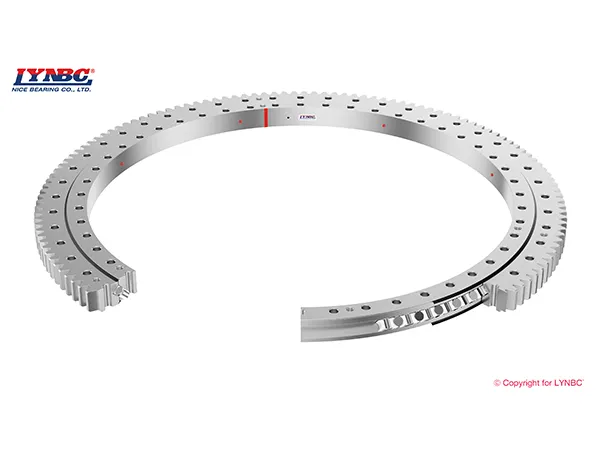
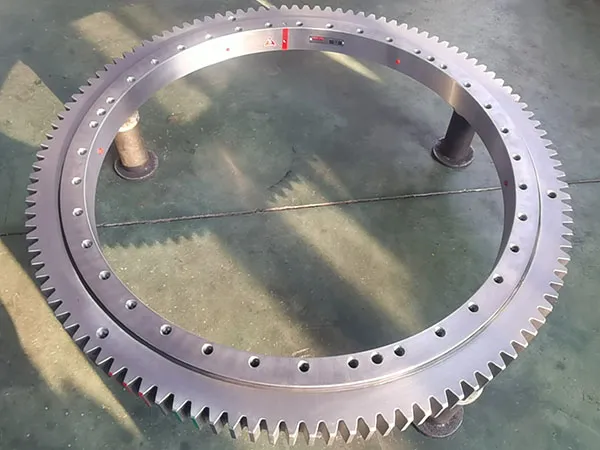
Slewing bearings play a crucial role in heavy machinery, construction equipment, wind turbines, material-handling systems, and various industrial applications. As the core rotational support component, their durability directly impacts equipment stability, operating efficiency, and long-term maintenance costs.
Therefore, a primary concern for many companies before purchasing slewing bearings is their service life.
This article will provide a comprehensive analysis of the typical service life of slewing bearings from a professional perspective, highlighting the key factors influencing their lifespan and offering practical maintenance recommendations to help companies effectively extend equipment lifespan.
Under standard working conditions and with proper maintenance, a high-quality slewing bearing typically offers a service life ranging from 50,000 to 100,000 hours.
However, actual service life is often shortened by load variations, improper lubrication, installation problems, or harsh operating conditions.
Understanding a bearing's true lifespan helps businesses:
Develop reasonable maintenance and replacement plans
Prevent equipment downtime due to bearing failure
Match more suitable models and structural designs during procurement
1. Load Conditions
Load is the primary factor affecting the lifespan of a slewing bearing.
When a bearing is subjected to its rated load, its lifespan is usually maintained within its design range. However, if:
Prolonged overload
Frequent impact loads
Unbalanced load distribution
All of these will accelerate the wear of the raceways and rolling elements, causing fatigue spalling and ultimately leading to premature failure.
Recommendation: Accurately calculate the overturning moment, axial load, and radial load during the selection phase to ensure a sufficient safety factor.
2. Lubrication Quality
Lubrication quality and frequency directly affect the rolling performance of the bearing.
Good lubrication can:
Reduce the coefficient of friction
Reduce metal-to-metal contact and wear
Prevent surface fatigue cracks
Reduce operating temperature
Insufficient lubrication, improper grease, or excessively long lubrication intervals will significantly shorten the lifespan.
Recommendation: Use high-quality lithium-based grease or manufacturer-recommended specialized grease, and top-up regularly.
3. Material Quality and Bearing Design
Long-life slewing bearings typically possess:
High-quality alloy steel material
Precise heat treatment process
Optimized raceway contact angle
High-efficiency sealing structure
Material and structural design determine the bearing's load-bearing capacity, fatigue strength, and corrosion resistance, and are crucial factors affecting its lifespan.
4. Installation Accuracy
Even high-grade bearings can have significantly reduced lifespan if improperly installed and adjusted.
Common installation problems include:
Eccentric installation
Insufficient flange flatness
Incorrect preload setting
Uneven stress on connecting bolts
Installation quality often determines the upper limit of lifespan.
5. Working Environment
Harsh environments accelerate the aging and damage of slewing bearings:
High humidity or salt spray causes corrosion.
Dust entering the raceway causes abrasive wear.
Extreme temperatures cause grease failure.
Chemical media cause seal aging.
For harsh environments, specialized bearings with reinforced seals or surface coatings can be selected.
To improve equipment reliability and reduce downtime losses, companies can take the following measures:
✔ Scientific Model Selection
Select the appropriate model based on equipment load, rotation speed, installation method, and environmental conditions.
✔ Standardized Installation and Commissioning
Ensure that flange flatness, bolt preload, and bearing clearance all meet standards.
✔ Regular Lubrication and Maintenance
Replenish grease regularly based on actual operating time, and replace with higher quality lubricant when necessary.
✔ Equipment Condition Monitoring
Temperature, vibration, and torque monitoring can detect signs of wear or fatigue in advance.
✔ Enhance Environmental Protection
Add dust covers, anti-corrosion coatings, or sealing structures to bearings to reduce the risk of external influences.
The service life of a slewing bearing is not fixed—it is the result of multiple interacting factors, including load, lubrication, material quality, installation, and environment. Through scientific selection, standardized installation procedures, and regular maintenance, companies can not only significantly extend bearing life but also reduce downtime risks, improve production efficiency, and ultimately achieve a higher long-term return on investment.
Optimizing Thin Section Bearing Torque for High-Speed Applications: Advanced Engineering Insights
2026-03-05 13:35Slewing Bearing Care in Wind Turbines: Expert Lubrication & Maintenance
2026-02-25 09:47Thin Section Bearing Corrosion Protection Methods: Maximizing Performance and Longevity
2026-01-28 08:55How to Extend the Life of Thin Section Bearings: Practical Tips for Precision Machinery
2026-01-23 09:37Address: Lianmeng Road, Jianxi district, Luoyang City,Henan province.
E-mail: info@lynicebearing.com
Phone: +86-379-60689957
If you are interested in our products and services,
please feel free to contact us!
Get in tuch

+86-379-60689957
Lianmeng Road, Jianxi district, Luoyang City,Henan province.